The Challenge of ABS-CBN for HD Live Field Broadcast Without Satellite TV
I was recently watched the live finale episode of ABS-CBN TV show Dream Maker whether on the network's iWantTFC or YouTube livestream through our widescreen 4K streaming TV. Watching in full HD widescreen content, in spite of a limited 30 frames per second in streaming compared to HD IPTV or DTH in full 60 frames per second, was more exciting than an older 4:3 SD video content from prehistoric TV broadcast technology, as we were transitioning from analog to digital TV. Once I watched the content, there were no freezing or scrambling even though some form of delay feed due to data transfer buffering.
As a resident near Caloocan Sports Complex, I often attempted to enter the vicinity but unfortunately only participating audience—mostly young ladies who were fans of the aspiring male singing-dancer artists known as "P-Pop" as an alternate-inspired from K-Pop—were allowed to enter and not open to general public. In spite of such preventive measures such as COVID-19 infection and stampede, I was not able to take a tour of the network's OB Van to determine what broadband Internet platform had been used to handle a live HD TV feed in 1080p 60fps format as a substitute to the traditional satellite TV dish antenna that was not yet used due to denial of broadcast franchise besides free TV and radio.
While without giving a details from ABS-CBN due to a secrecy reasons, here I attempted to have a sample platforms used for a modern-day OB van state-of-the-art technologies going digital.
Live Digital TV System Solutions
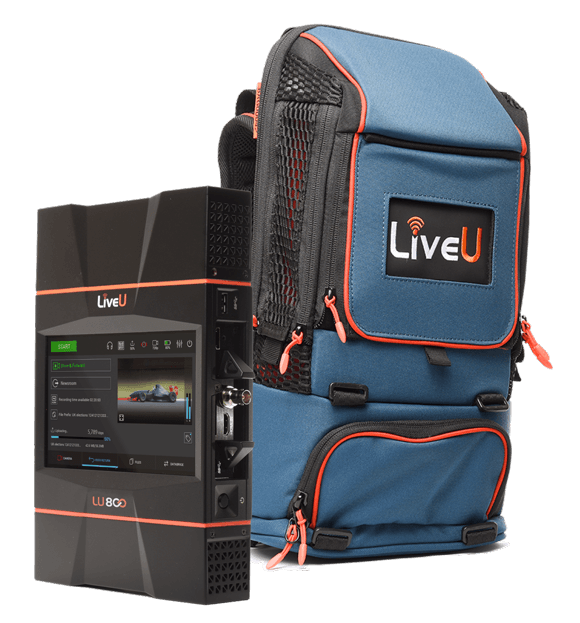
One of the current platform solutions to handle live TV feed was LiveU. Established in 2010s, LiveU was originally designed for live field news and sports coverage but it may be also apply for TV specials whether indoor or outdoor. First generation platform supports 4G LTE and Wi-fi and later evolved for 5G in latest prototype.
While most participating TV broadcasters around the world have been tried and tested to use LiveU, in the Philippines Net 25 was the first broadcaster to use such platform in 2010s, in time the network didn't have an OB Van for live field news reporting.
Video Codec Support
Earlier Internet-based live TV broadcast used H.264 codec in either variable bit rate (VBR) or adaptive bit rate (ABR) in order to minimize data footprint even on some instance occuring a dismal lower bit rate uplinking due to a demand in 4G network connectivity. To resolve such shortcomings, newer prototype may support HEVC or future VVC in order to compress more data footprint, but because of uncertainty in multiple licensing pools to pay these two there were an alternative platform such as royalty-free AV1 or affordable licensed LCEVC H.264.
4G, 5G, Wi-fi Fiber, Or Broadband Satellite?
I was not sure what kind of mobile or satellite broadband Internet would ever use to make a stable connection without encountering video artifact, freezing, or scrambling. If they use either 4G, 5G, or Wi-fi, they need a specialized high-gain transceiver lens antenna with higher efficiency of handling higher data uplink even in long distance through cellphone tower.

Or else while Starlink is not yet arrived in the Philippines, there were an alternative in satellite broadband Internet service in spite of a limited data bandwidth and expensive equipment. The current product being available in the market was Kacific and Cignal Connect.
Conclusion
An Internet-based live field TV broadcast may be the only alternative platform as ABS-CBN had been committed such matter. No matter how the network may find a way to cover live events in order to satisfy its loyal TV audience, whether on livestreaming, cable, IPTV, direct-to-home (DTH) satellite TV, or free TV blocktime. Until if it would have enough finances from sponsors to operate their broadcast platforms, facilities, workers and artists, it's up to their risk in terms of trust and values for the past nearly four decades since re-opening.

Comments
Post a Comment